Used bikes
Two-wheeler RC transfer in Tamil Nadu: documents, steps and deadlines
When a bike changes hands, the sale isn't finished until the registration certificate is in the new owner's name. Here's how the ownership transfer works in Tamil Nadu, for both the buyer and the seller.
In short
- The seller should report the sale to the RTO within 14 days, and the buyer should apply within 30 days.
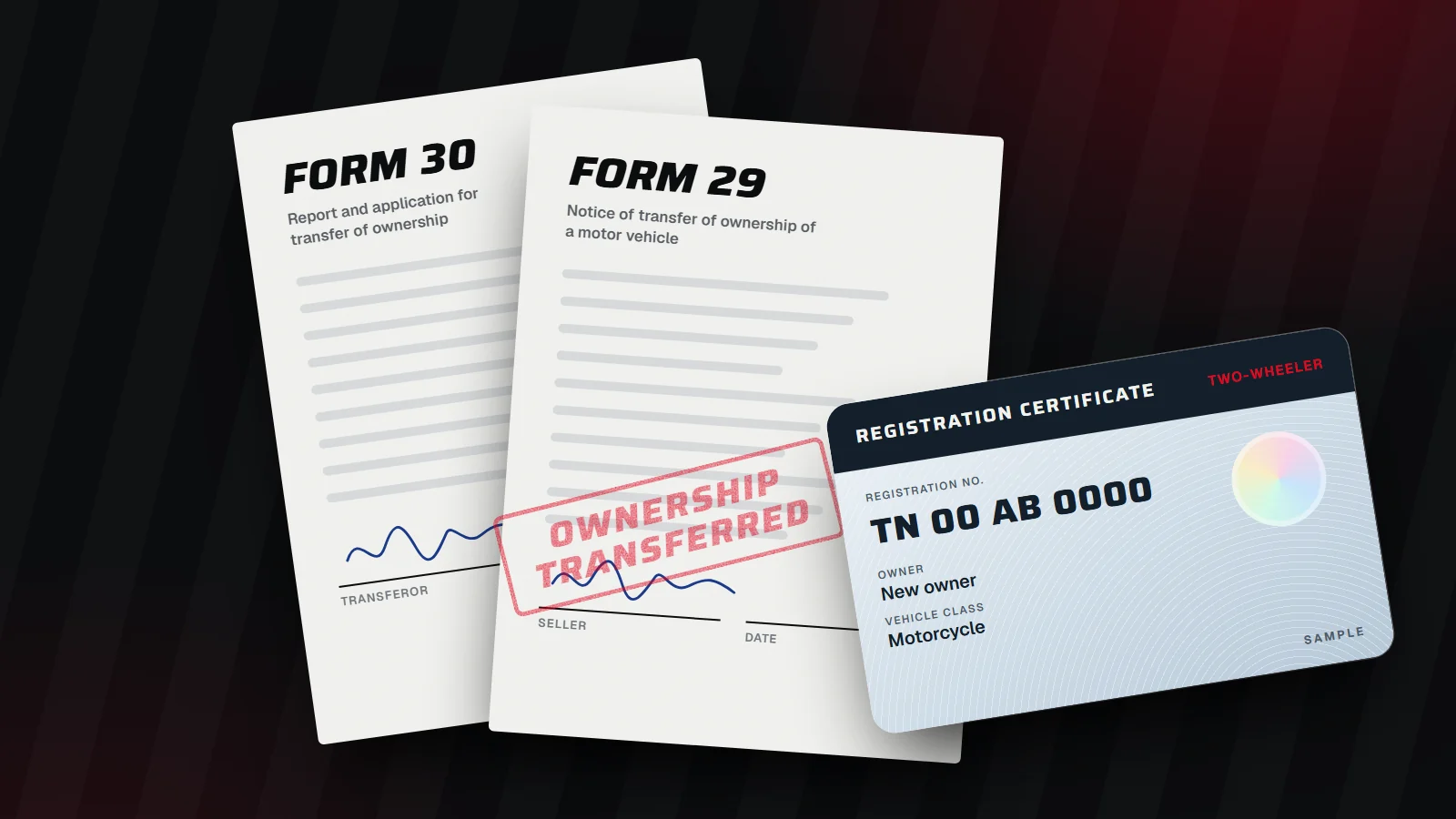
- You need the original RC, Forms 29 and 30, valid insurance, PUC, and ID and address proof.
- A bike with a loan needs Form 35 and the lender's NOC. A bike from another state needs a Form 28 NOC.
- Apply online on the Parivahan portal, then follow your RTO's instructions for documents and inspection.
- Move the insurance into the buyer's name within 14 days of the transfer.
Before you start: this guide explains the general process as of October 2026. Forms, fees and online steps are updated from time to time, so check the Parivahan portal or your RTO for the latest before you apply.
Why the transfer matters
Handing over the keys doesn't change who legally owns a bike. Until the RTO records the new owner on the RC:
- For the seller: traffic challans, accident cases and any misuse of the bike can be traced back to you.
- For the buyer: you can't renew the registration, take a loan against the bike or easily sell it on, and an insurance claim gets complicated when the policy and RC are in someone else's name.
The deadlines
Section 50 of the Motor Vehicles Act, 1988 sets the time limits for reporting a transfer, and Section 157 covers the insurance:
| Who | What | Time limit |
|---|---|---|
| Seller | Report the transfer to the registering authority, for a bike registered in the same state | Within 14 days of the sale |
| Seller | Report the transfer, for a bike registered in another state | Within 45 days of the sale |
| Buyer | Report the transfer and apply to have the RC changed | Within 30 days of the sale |
| Buyer | Apply to the insurer to move the policy into their name | Within 14 days of the transfer |
In practice, the simplest way to meet all of these is for the buyer and seller to fill in the forms together on the day of the sale and submit the application straight away.
The forms, explained
- Form 29, notice of transfer of ownership: filled in and signed by the seller. It tells the RTO the bike has been sold. Usually needed in duplicate.
- Form 30, report and application for transfer of ownership: signed by both the seller and the buyer. If the bike is under a loan, the financier also signs it to consent to the transfer.
- Form 35, termination of hypothecation: needed when the bike was bought on a loan that has been closed. It goes in with the lender's NOC to remove the lender's name from the RC.
- Form 28, no objection certificate (NOC): needed when the bike is registered in another state and is being moved to Tamil Nadu. It's issued by the original RTO.
The forms are available on the Parivahan portal and at RTO offices. When you apply online, most details are entered on screen, and the system can generate the filled-in forms for you to print and sign.
Documents checklist
From the seller
- The original RC, smart card or book
- Forms 29 and 30, signed
- A valid insurance certificate
- A valid PUC certificate
- ID and address proof, such as Aadhaar
- Form 35 and the lender's NOC, if the bike had a loan
- A Form 28 NOC, if the bike is registered outside Tamil Nadu
From the buyer
- Form 30, signed
- ID and address proof, such as Aadhaar. Make sure your mobile number is linked to Aadhaar if you plan to use the online, OTP-based services.
- Passport-size photos, if your RTO asks for them
The Tamil Nadu transport department's FAQ lists PAN (or Form 60/61) as not required for two-wheelers, but it doesn't hurt to carry a copy in case your RTO asks. Photocopy everything and keep a set for yourself.
Step by step on Parivahan
Tamil Nadu uses the central Vahan system, so the transfer is started online on the Parivahan portal. The screens change from time to time, but the steps generally look like this:
- Go to parivahan.gov.in and open Online Services, then Vehicle Related Services.
- Choose Tamil Nadu and enter the bike's registration number.
- Select Transfer of Ownership from the list of services.
- Verify with the last digits of the chassis number and the OTP sent to the mobile number registered with the vehicle.
- Fill in the buyer's details and the details of the sale.
- Upload scanned copies of the documents, if asked.
- Pay the fee online. The amount is shown at payment, and includes the transfer fee and the smart card RC charges.
- Print the application and the receipt. Submit the signed forms and documents at the RTO if asked, and bring the bike for inspection if required.
Once it's approved, the new RC is issued in the buyer's name, usually as a smart card sent by post. You can check the status on the Parivahan portal with your application number.
Special cases
The bike has a loan on it
The loan has to be closed first. Get the NOC from the lender, then apply to remove the hypothecation using Form 35. This can be done before the transfer or, in many cases, together with it. Either way, the buyer shouldn't pay in full until the loan is cleared.
The bike is registered in another state
The seller needs a Form 28 NOC from the RTO where the bike is registered. If the bike will now be kept in Tamil Nadu, it also has to be re-registered here within 12 months, which means paying the road tax that applies in Tamil Nadu. Ask your RTO about the steps, and about claiming a road tax refund from the original state.
The owner has passed away
The legal heir can transfer the bike into their own name, through a separate process that usually uses Form 31. The RTO should be informed within 30 days of the owner's death, and the application made within three months. You'll need the death certificate and proof of succession.
The RC is lost
Apply for a duplicate RC first, using Form 26. You'll usually need a police report for the lost RC with the application. The transfer can only go ahead once the duplicate has been issued.
Common mistakes to avoid
- Unsigned or undated forms. Every signature box matters, and the sale date should match the delivery note.
- Names that don't match. The name on the RC, the ID proofs and the forms should match exactly. Fix any spelling differences before applying.
- Expired insurance or PUC. Renew them before you apply.
- Handing over the bike without a delivery note. A signed note with the date and time protects the seller if the bike is involved in anything after the sale.
- Leaving it to the other person. Sellers, follow up until the RC shows the new owner. Buyers, don't put it off: the 30-day clock starts on the day of the sale.
How we help with transfers
When you buy a used bike from us or sell yours through park & sale, we check the RC, insurance and loan clearance up front, and we help both the buyer and the seller with the RC transfer paperwork, so the bike changes hands properly. If you're buying or selling privately, our used bike buying checklist and our guide to selling your bike cover the rest of the process.
Questions we get asked
How long does an RC transfer take in Tamil Nadu?
It varies by RTO and workload. Once the application, fee and documents are in order, the transfer is usually processed within a few weeks, and the smart card RC is posted afterwards. You can track the status on the Parivahan portal with your application number.
Can I do the whole RC transfer online?
You can start it, fill in the details and pay the fee online. Depending on your RTO and your case, you may still need to submit signed documents in person or bring the bike in for inspection.
What if the seller won't sign the transfer forms?
The transfer can't go ahead without the seller's signature on Forms 29 and 30, so get them signed before you pay. If you've already paid and the seller won't cooperate, contact your RTO and keep your proof of payment and the delivery note.
Does the insurance move to the new owner automatically?
Not fully. The buyer should apply to the insurer within 14 days of the transfer to have the policy moved into their name. Without that, an own-damage claim can be rejected.

Written by the Rebooterz teamWe're a car and bike paint and bodywork garage in Thiruverumbur, Trichy. Over five years we've finished more than 120 vehicles, from scratch and dent repairs to full resprays, airbrush art and restorations, and we now buy and sell used bikes too. More about us.