Custom & restoration
Custom bike painting and airbrush art: a rider's guide
A custom tank or a set of airbrushed panels can make a stock bike unmistakably yours. Here's how to plan the design, what happens in the paint shop, and how to keep the result looking sharp.
In short
- Decide the parts first: the tank alone, tank and side panels, or the full set.
- Bring reference images, and think about how the design wraps around the tank's curves.
- Airbrush art is built up in layers and sealed under a fuel-resistant clear coat.
- Dents and old paint are fixed first. Art only looks as good as the surface under it.
- Wipe fuel spills straight away and avoid rough tank covers and magnetic bags.
What can be painted
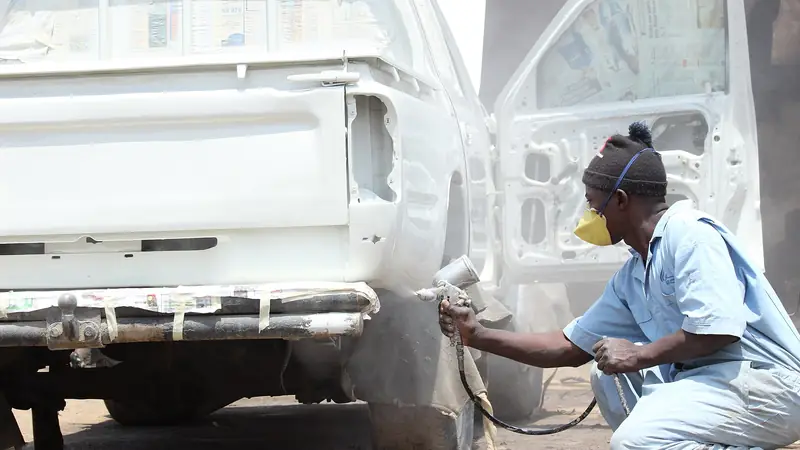
On most bikes, the visible painted parts are the fuel tank, the side panels, the front and rear mudguards, and on some models a headlamp cowl, fairing or tail section. Scooters are mostly body panels. Metal parts like tanks and steel mudguards are painted much like a car panel. Plastic panels need their own preparation, so the paint grips and doesn't crack when the plastic flexes.
A lot of riders start with the tank alone. It's the centrepiece of the bike, and a custom tank with everything else left stock already changes the whole look. Others go for the full set, so every panel ties together.
Repaint, custom colour or airbrush art?
- Repaint: the original colour, restored. The right choice for a faded or scratched bike you want back to showroom condition, or before a sale.
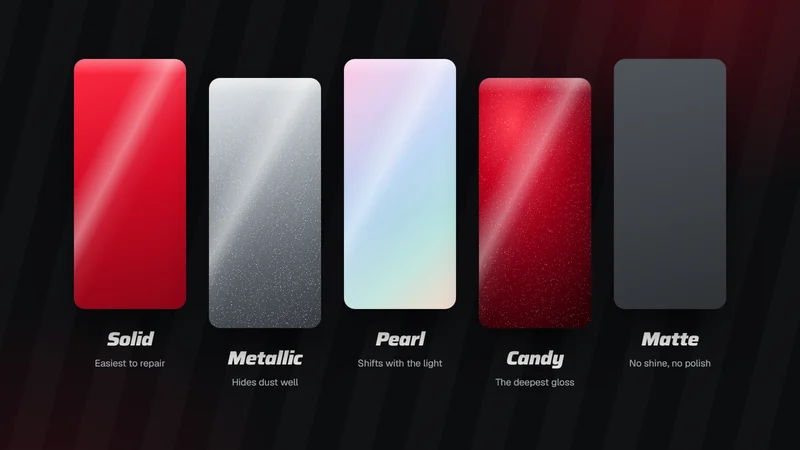
- Custom colour: a new colour or finish, such as a candy red, a pearl white or a matte grey, sometimes with a two-tone split or a pinstripe. Our guide to paint finishes explains how each one looks and lasts.
- Airbrush art: hand-painted artwork such as flames, skulls, portraits, wildlife, lettering, logos or a full mural. Every piece is one of a kind.
Popular styles
- Classic two-tone tanks with a pinstripe at the split, a natural fit for Royal Enfields and retro bikes.
- Flames and tribal designs, from subtle "ghost" flames that only show up in sunlight to bold, full-colour work.
- Racing liveries, with stripes, numbers and colour blocks on sports and naked bikes.
- Portraits and tributes: a face, a pet, a deity or a favourite film star.
- Lettering: a name, a date or a club logo, hand-painted rather than stuck on.
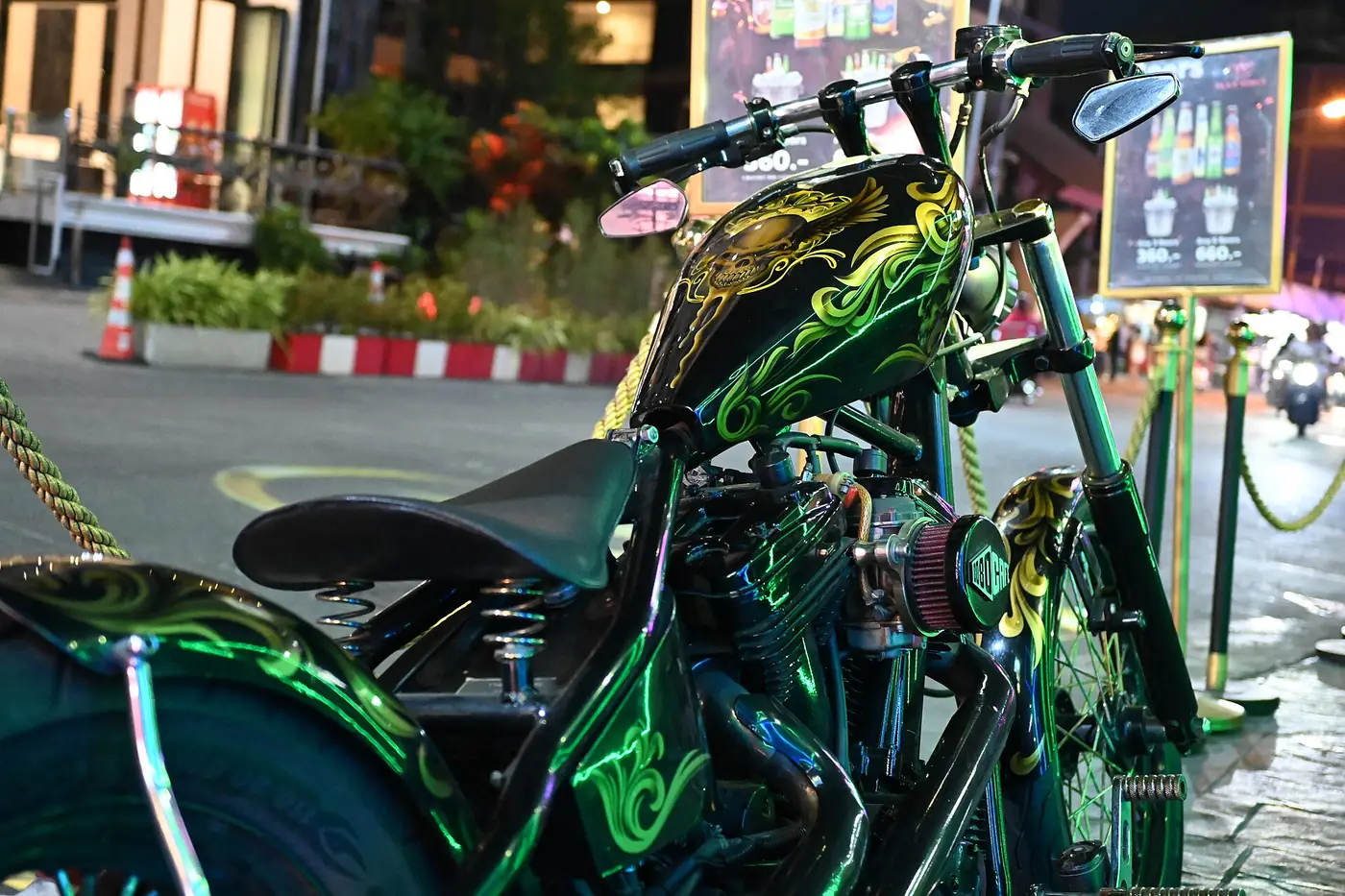
Planning your design
A little planning before you come to the paint shop saves a lot of back and forth.
- Collect references. Save photos of bikes, artwork and colours you like. Even a rough sketch helps.
- Think in three dimensions. A tank curves in every direction. A design that looks great flat on a phone screen may stretch or break where it wraps around the knee recesses or the filler cap.
- Design for distance. Big shapes and strong contrast read from across the road. Fine detail is for people standing next to the bike. The best designs work at both distances.
- Match the bike. Consider the frame, engine, seat and wheel colours. A design that picks up a colour already on the bike looks intentional.
- Decide on both sides. Mirrored left and right, or a different scene on each side?
During the design consultation, we'll go through your references with you, suggest what will work on your tank's shape, and agree the layout before any paint goes on.
How airbrush art is built
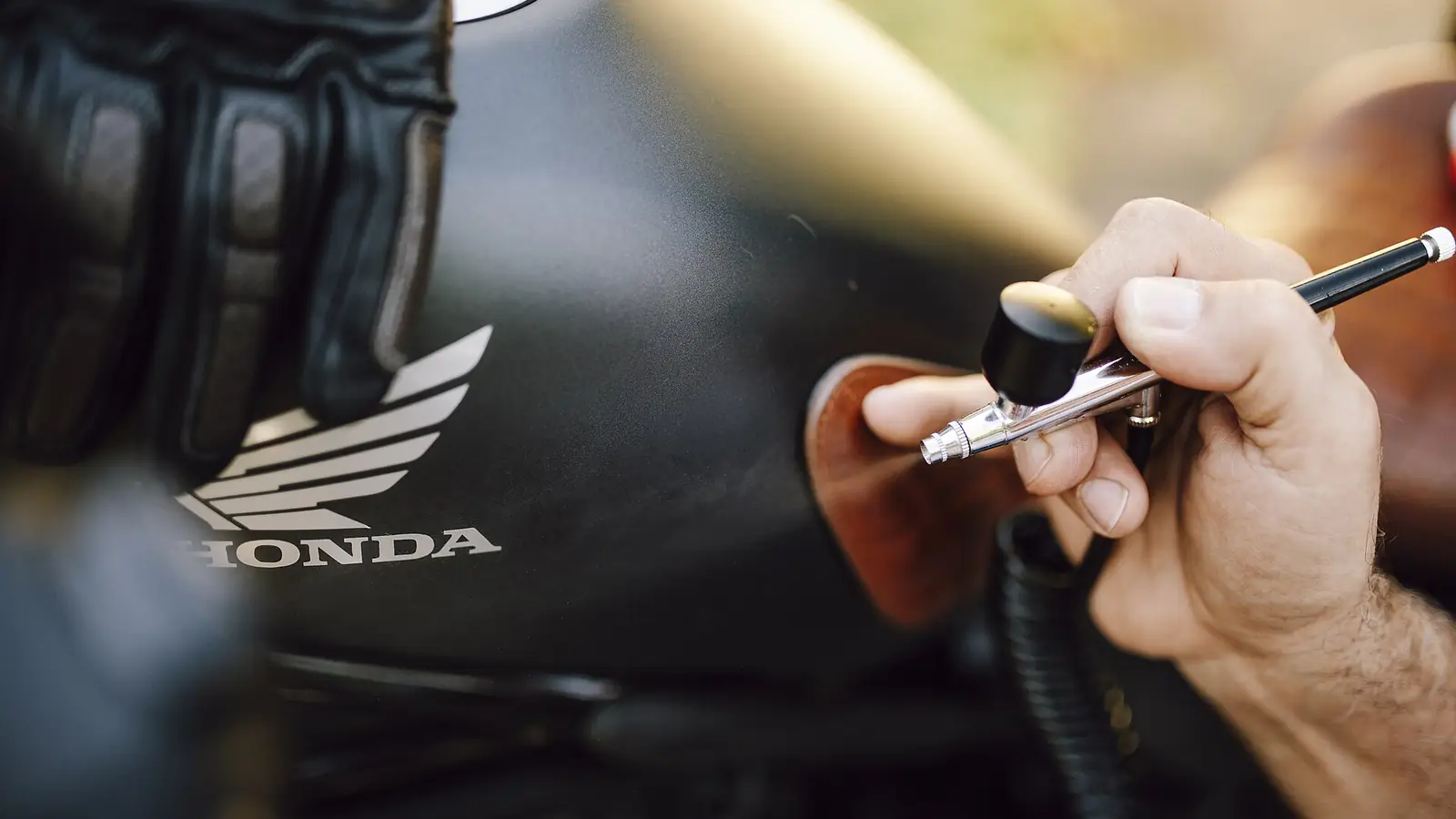
An airbrush is a small, pen-sized spray gun that lays down a very fine mist of paint, so the artist can build soft fades, sharp edges and fine detail by hand. A typical job goes like this:
- Prep: the parts come off the bike, any dents are repaired, and the old paint is sanded or stripped back. Rust is treated.
- Primer and base: primer seals the surface, then the background colour is sprayed.
- Layout: the design is sketched or masked onto the part with tape and stencils.
- Layering: the artwork is built up colour by colour, from background tones to shadows to highlights. A complex piece can take many hours of layering.
- Clear coat: several coats of clear protect the artwork and give it depth. On a tank, the clear has to stand up to petrol.
- Polish: the clear is flatted and polished, so the artwork sits under a smooth, glassy surface.
Tanks need extra care
A fuel tank is drained and made safe before any repair or paint work starts. The area around the filler cap takes regular splashes of petrol, which dissolves and dulls unprotected paint, so the clear coat needs to be fuel resistant and properly hardened before the bike is ridden and refuelled. If your tank has dents too, here's how tank dents are repaired.
A note on helmets
Painted helmets look fantastic, and they're a popular canvas for airbrush art. A helmet shell needs paint that's compatible with its material, since some solvents can weaken certain plastics. The ISI certification mark must stay visible. And if a helmet has taken a hard knock, replace it rather than paint it: the protective liner inside may be damaged even if the shell looks fine.
What decides the time and cost
- Number of parts: the tank alone, or the full set.
- Condition: dents, rust or failing old paint add prep time.
- Finish: candies and pearls take more coats than solid colours.
- Detail: simple stripes are quick, while a photo-realistic portrait can take days of work.
We give you a price and a timeline once the design is agreed.
Keeping it looking sharp
- Wipe fuel spills off the tank immediately, every time you refuel.
- Use a soft, clean tank pad. Magnetic tank bags and rough covers grind dust into the paint.
- Wash with car shampoo and a microfibre mitt, never a stiff brush or detergent.
- Park in the shade where you can. Strong sun fades bright colours over time.
- Polish gently with a fine, non-abrasive polish once or twice a year, and never polish a matte finish.
Our guide to protecting paint from Trichy's sun and monsoon has more care tips that apply to bikes as well as cars.
Changing the colour on your RC
If your custom paint changes the bike's main colour, the new colour needs to be recorded on your RC through your RTO. We explain how in our paint finishes guide. Artwork or stripes over the original colour usually don't count as a colour change, but check with your RTO if you're unsure.
Questions we get asked
Can you airbrush a Royal Enfield tank?
Yes. Royal Enfield tanks are among the most popular canvases for custom paint and airbrush art, and the classic tank shape suits both two-tone designs and full murals.
How long does airbrush art last?
Sealed under a good clear coat and looked after, it lasts as long as a factory finish. Fuel spills, strong sun and rough covers are the main threats.
Can I go back to the stock colour later?
Yes. The custom paint can be sanded back and the parts repainted in the original colour at any point, with new decals if the bike had them.
Will a custom paint job affect resale value?
A tasteful, well-done custom can attract the right buyer. Very personal designs, like portraits or names, narrow the market. If you plan to sell soon, a fresh repaint in the stock colour is the safer choice.

Written by the Rebooterz teamWe're a car and bike paint and bodywork garage in Thiruverumbur, Trichy. Over five years we've finished more than 120 vehicles, from scratch and dent repairs to full resprays, airbrush art and restorations, and we now buy and sell used bikes too. More about us.