Custom & restoration
Metallic, pearl, candy or matte? Choosing a paint finish
The finish you choose changes more than the look. It decides how the paint ages, how easy it is to keep clean, and what a scratch costs to fix in five years. Here's how the main finishes compare.
In short
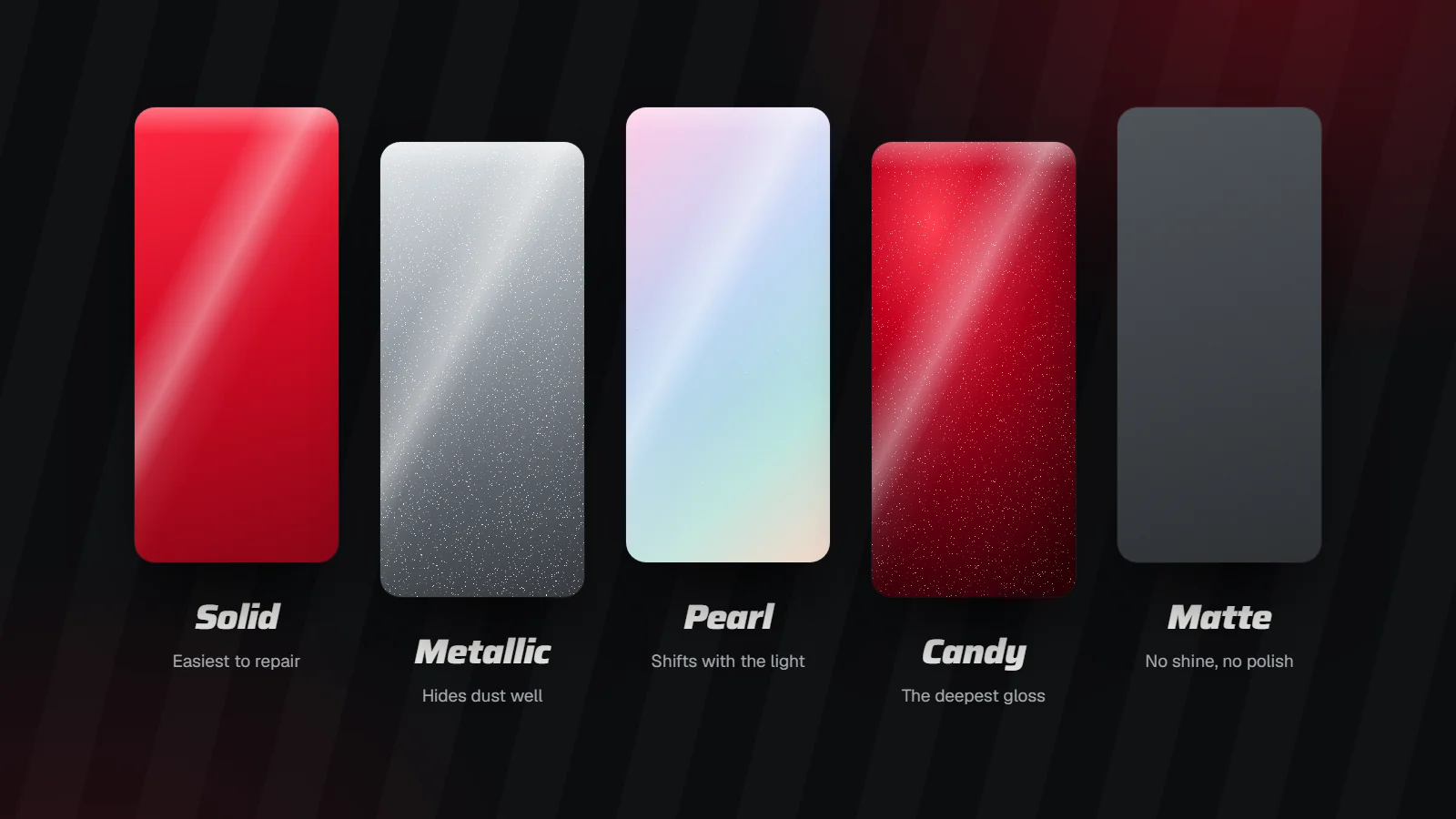
- Solid colours are the easiest to maintain and repair. Metallics add sparkle and hide dust well.
- Pearls and candies have more depth, but take more coats and are harder to match later.
- Matte looks striking but can't be polished, so scratches and stains are harder to fix.
- Whatever you choose, see a sample panel in daylight before the vehicle is painted.
- Changing colour? The new colour has to be recorded on your RC.
Solid colours
Solid (non-metallic) colours are pure pigment with no flakes: classic white, red, black, yellow. They're the simplest finish to spray, the easiest to match when a panel is repaired, and the cheapest to touch up. Solid white is also one of the most practical colours in a hot climate. It stays cooler in the sun and hides fine scratches and dust.
The trade-off is that solid colours can look flat next to metallics, and dark solids, black especially, show every swirl and scratch.
Metallic
Metallic paint has tiny aluminium flakes mixed into the colour. They catch the light and give the paint a sparkle that changes as you walk around the car. Most of the silvers and greys on the road are metallics, as are many dark blues and reds.
Metallics hide dust and light scratches well, which is a big part of why they're so popular. They're harder to repair invisibly than solid colours, though. The flakes have to lie at the same angle as in the original paint, or the repaired panel looks lighter or darker from certain angles. Painters handle this by spraying in even coats and blending into the next panel.
Pearl
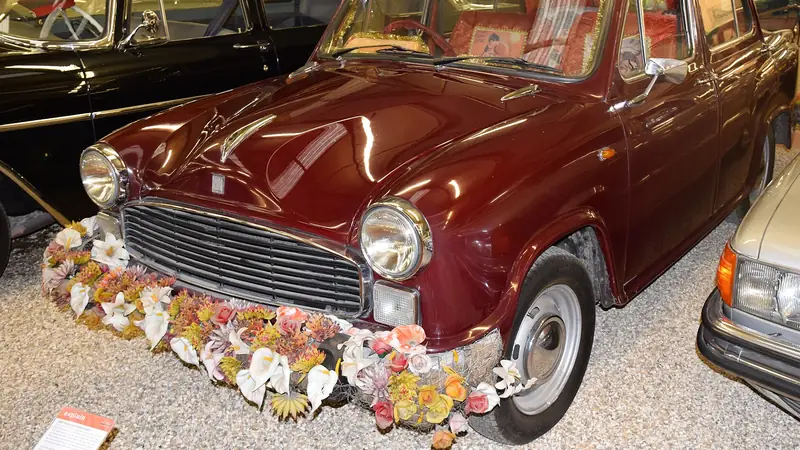
Pearl paints use mica or synthetic pigments that don't just reflect light but bend it, so the colour seems to glow and shift. A pearl white can look warm in the morning and almost blue in the evening. Some pearls are colour-shifting and move between two or three distinct colours, like the car in the photo above.
Many factory pearl whites are tri-coat finishes: a base colour, a translucent pearl mid-coat, then clear. The number of pearl coats changes how the colour looks, so repairs take extra care and a test panel to get right.
Candy
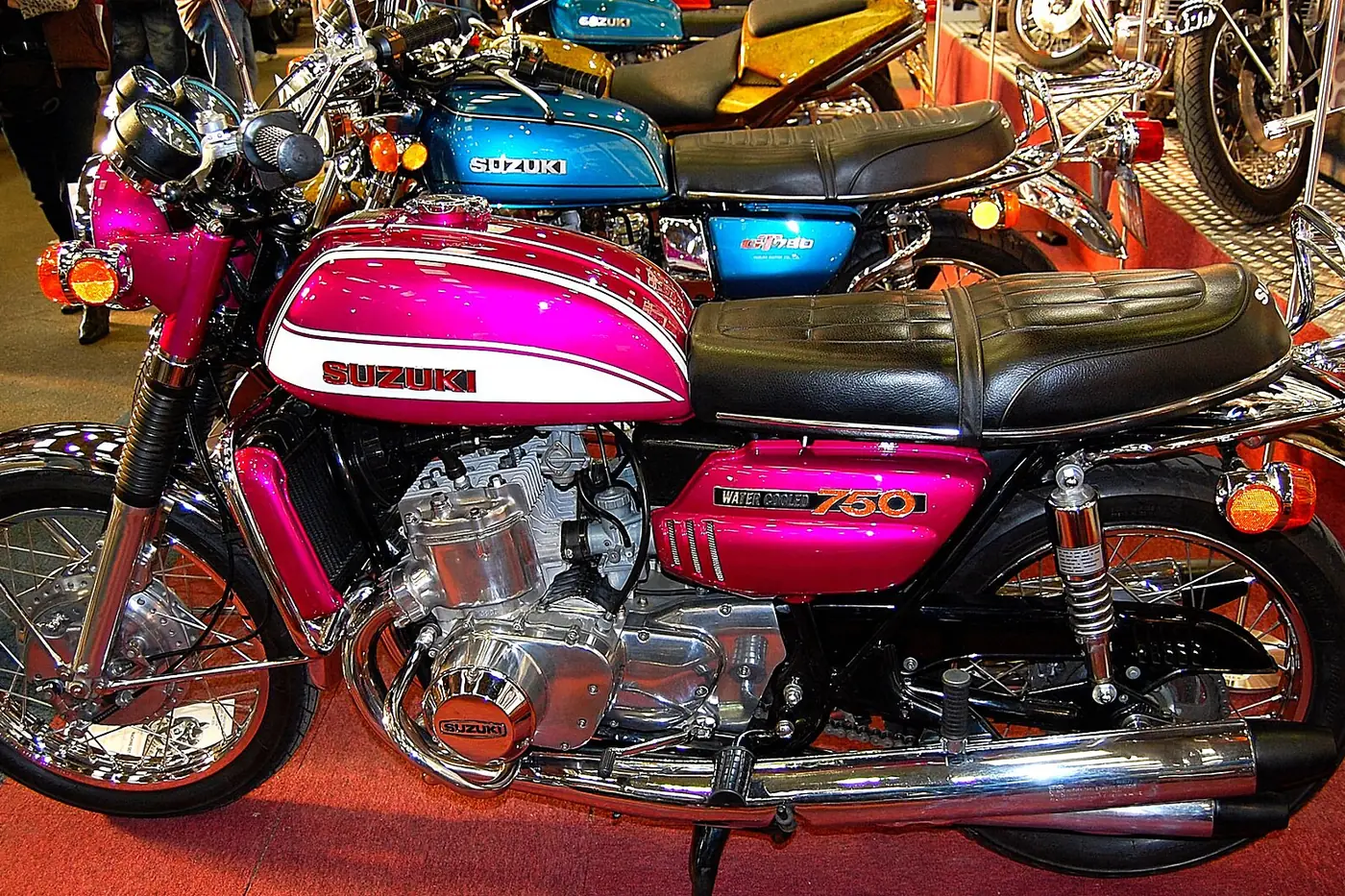
Candy is the deepest-looking finish there is. A bright metallic base, often silver or gold, is covered with a transparent tinted colour, then clear. You see the colour and, through it, the sparkle of the base, which gives candy its "wet" depth. Candy reds, blues and greens are favourites on custom bikes and show cars.
The catch is that candy gets darker with every coat. That makes it hard to spray evenly across a whole vehicle, and very hard to match for a repair, which often means repainting the whole panel or more. Candy colours also tend to fade faster in strong UV than standard colours, so a good clear coat and shaded parking matter even more.
Matte and satin
Matte finishes use a special clear coat that scatters light instead of reflecting it, so the paint has no shine. Satin sits in between, with a soft, low sheen. Matte grey and matte black are the classics, and for a stealthy, modern build the look is hard to beat.
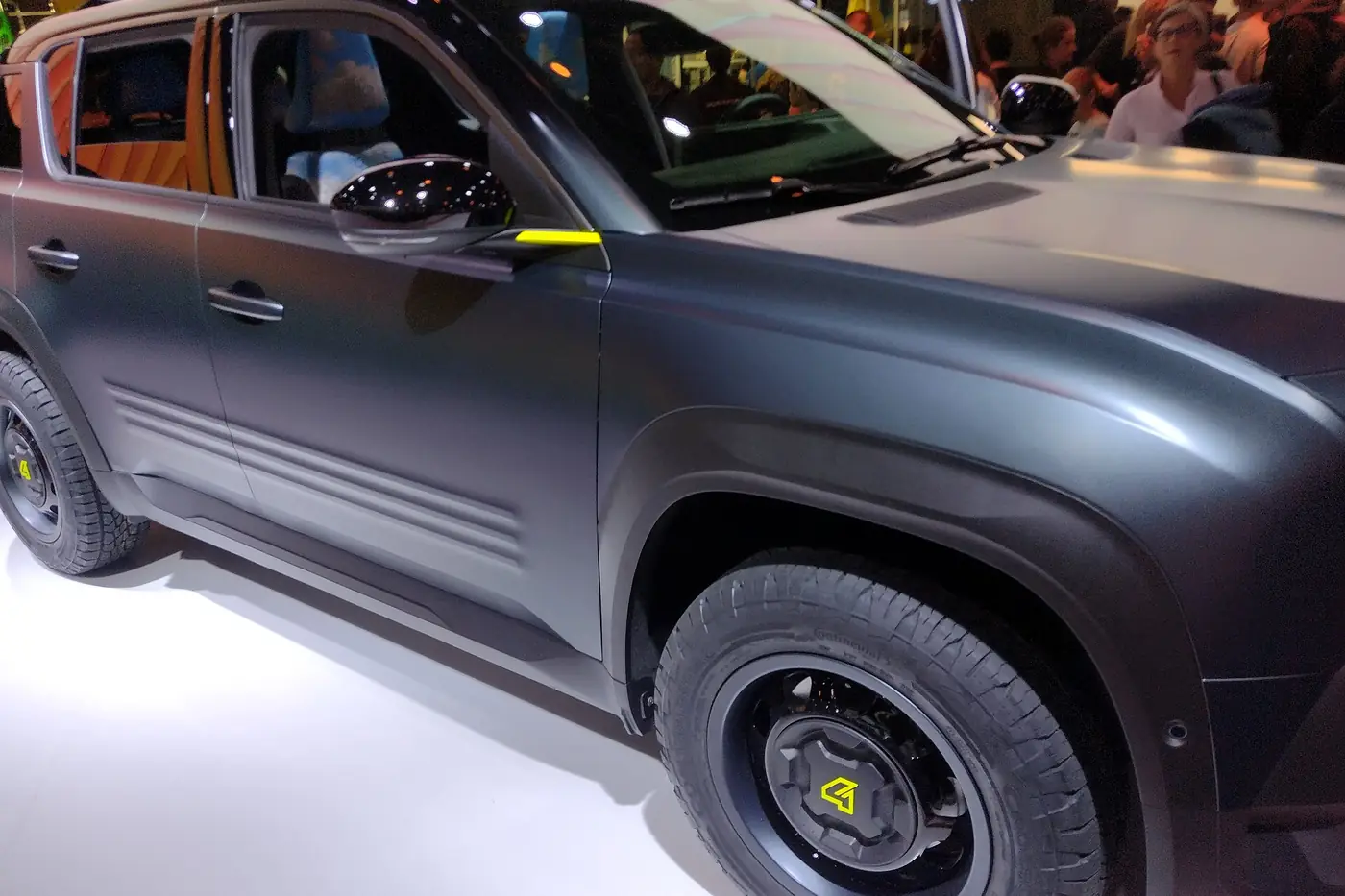
Matte needs commitment, though:
- No polishing or waxing. Polishing a matte finish makes it shiny in patches, and normal wax leaves blotches. You need matte-safe shampoo and products.
- Scratches can't be buffed out. A scratch that would polish away on gloss paint usually means respraying the panel on matte.
- Stains set quickly. Bird droppings, sap and fuel need cleaning off fast, because you can't polish out the mark they leave behind.
Matte suits a vehicle that's garaged and looked after. On a daily car parked under a tree, it can be hard work.
Two-tone and accents
You don't have to change the whole vehicle to make it yours. A contrast roof, a bonnet stripe, painted mirror caps or a two-tone tank on a bike are popular ways to personalise a vehicle without the cost of a full respray. Accents are also a good way to combine finishes, like a gloss body with a matte stripe.
How the finishes compare
| Finish | Look | Hides dust and swirls | Ease of repair | Upkeep | Relative cost |
|---|---|---|---|---|---|
| Solid | Clean, even colour | White, yes. Dark colours, no | Easiest | Easy | Lowest |
| Metallic | Sparkle that changes with the angle | Very well | Moderate | Easy | Moderate |
| Pearl / tri-coat | Glow and colour shift | Well | Harder | Easy | Higher |
| Candy | Deep, wet, jewel-like | Moderately | Hardest | Needs care and shade | Highest |
| Matte / satin | No shine, soft and modern | Poorly, marks show | Hard | Matte-safe products only | Higher |
How to choose
- Where it's parked. Outdoors in full sun? Lighter colours and standard metallics age most gracefully. Candy and matte do best in a garage.
- How it's used. A daily car or commuter bike needs a finish that's easy to keep clean and cheap to repair. A weekend car or show bike can carry something more delicate.
- How long you'll keep it. Unusual colours can narrow the market when you sell. Factory-style colours are the safe bet for resale.
- Repair costs later. A small scrape on a solid colour is a simple panel job. On a candy or a tri-coat pearl, it can mean much more.
Always see a sample panel first
A colour on a screen, a paint chart or someone else's car never looks quite the same on your vehicle. Sunlight in Trichy is bright and warm, and many colours look completely different at midday than in the shade or under workshop lights. That's why we spray a sample panel first and let you look at it outside before the vehicle is painted. Bring reference photos, a part painted in the colour you like, or even a car you've spotted. We'll match and mix to it.
Changing colour? Update your RC
Your vehicle's colour is printed on its registration certificate (RC). Under Section 52 of the Motor Vehicles Act, a vehicle shouldn't be altered so that it no longer matches the details on its RC, so a colour change has to be approved and recorded by your RTO. The RTO may inspect the vehicle after painting. The same applies to a full vinyl wrap that changes the vehicle's visible colour. Once the RC is updated, tell your insurer so the policy matches the vehicle.
Repainting in the same colour, or adding small accents and stripes, doesn't change the colour on your RC. If you're not sure whether a design counts as a colour change, check with your RTO before work starts.
Questions we get asked
Which paint finish is easiest to maintain?
Solid white and light metallics like silver. They stay cooler in the sun, hide dust and fine scratches, and are simple to repair.
Is matte paint a good idea in India?
It can be, if the vehicle is garaged and you're happy to use matte-safe products. For a car that's parked outside every day and washed at the roadside, a gloss finish is far more forgiving.
Can you paint my bike in a candy or pearl colour?
Yes. Candy and pearl finishes look especially good on tanks and side panels, and a bike is a great way to try a bold finish. See our custom bike painting guide for ideas.
Do I need RTO permission to change my vehicle's colour?
Yes. A colour change has to be approved and recorded on your RC by your RTO, and the vehicle may be inspected after painting. Check the current process and documents with your RTO before work starts.

Written by the Rebooterz teamWe're a car and bike paint and bodywork garage in Thiruverumbur, Trichy. Over five years we've finished more than 120 vehicles, from scratch and dent repairs to full resprays, airbrush art and restorations, and we now buy and sell used bikes too. More about us.