Paint & bodywork
Scratch touch-up, panel paint or full respray?
Most paint damage falls into one of three fixes, and picking the right one saves money. Here's how to read your car's scratches, chips and faded panels the way a painter does.
In short
- Run a fingernail across the scratch. If it doesn't catch, polishing may remove it.
- If it catches, or you can see grey primer or bare metal, the panel needs paint.
- Repaired panels are usually blended into their neighbours so the colour matches.
- A full respray makes sense when the clear coat is failing across the car, many panels are damaged, or you're changing colour.
First, know what you're looking at
Factory paint on a modern car is much thinner than most people expect: all the layers together are roughly as thick as a sheet of paper. From the top down, they are:
- Clear coat: a transparent layer that gives the shine and takes the sun, rain and bird droppings.
- Base coat: the actual colour, including any metallic or pearl effect.
- Primer: usually grey, white or dark. It bonds the colour to the body and protects the metal.
- The panel itself: steel or aluminium, or plastic on most bumpers.
Which layer a scratch reaches decides how it gets fixed.
The fingernail test
Wash and dry the area. Then run your fingernail gently across the scratch, not along it.
- Your nail doesn't catch: the scratch is probably in the clear coat only. Good news: it can often be polished out.
- Your nail catches slightly: it may be through the clear into the colour. Polishing will soften it, but probably won't remove it.
- Your nail catches and you can see grey, white or shiny metal: the scratch is down to the primer or bare metal. It needs paint, and soon, because exposed metal rusts once the rain gets in.
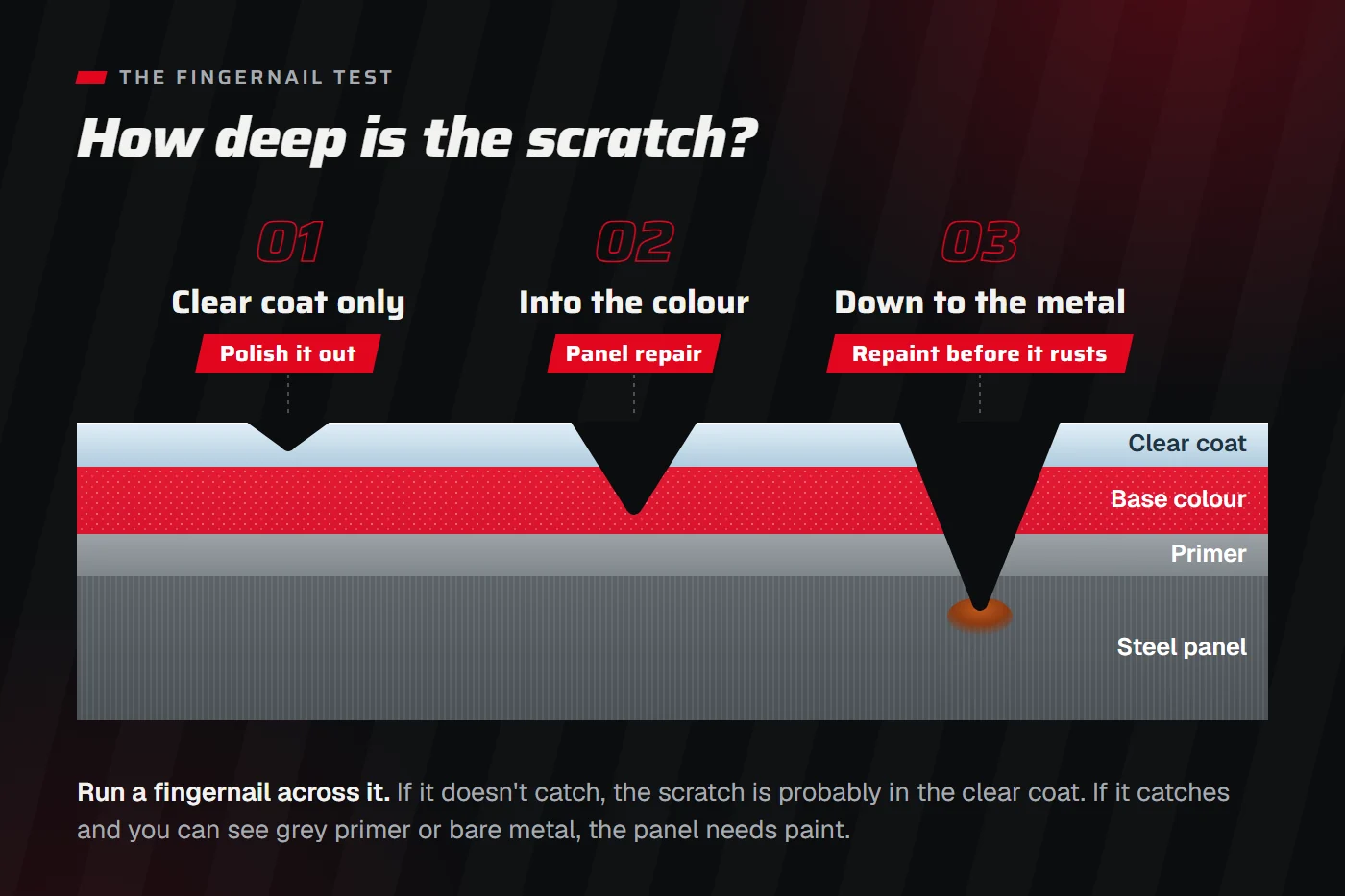
Light matters. Look at the scratch in daylight and from a low angle. In shade or under tube lights, shallow marks can look deeper than they are, and dents can disappear completely.
When a polish is enough
Machine polishing removes a very thin layer of clear coat to level out fine damage. It works well on:
- Swirl marks from washing with a dirty cloth or brush
- Light scuffs where another car's paint has rubbed onto yours
- Fine scratches from bushes, bags or a passing scooter's handlebar
- Dull, hazy paint that's oxidised but still has its clear coat
The catch is that clear coat can only be polished so many times before it gets too thin. If a car has been heavily polished in the past, there may not be much left to work with.
When a touch-up works
Stone chips on the bonnet and front bumper are part of life on the highway. A touch-up, where paint is carefully filled into the chip, is a good option when the chip is small, the rest of the panel is fine and the main goal is to stop rust starting. It won't be invisible up close, but it protects the metal and costs very little.
Touch-up pens from accessory shops are fine for tiny chips. For anything bigger than a few millimetres, a brushed-in touch-up usually leaves a blob that looks worse than the chip did.
When the panel needs painting
A panel repair means sanding the panel, priming where needed, then spraying colour and clear coat. You need one when:
- A scratch catches your nail and shows primer or metal
- The panel has a dent, crease or scrape that has cracked the paint
- Someone has keyed the door or bonnet
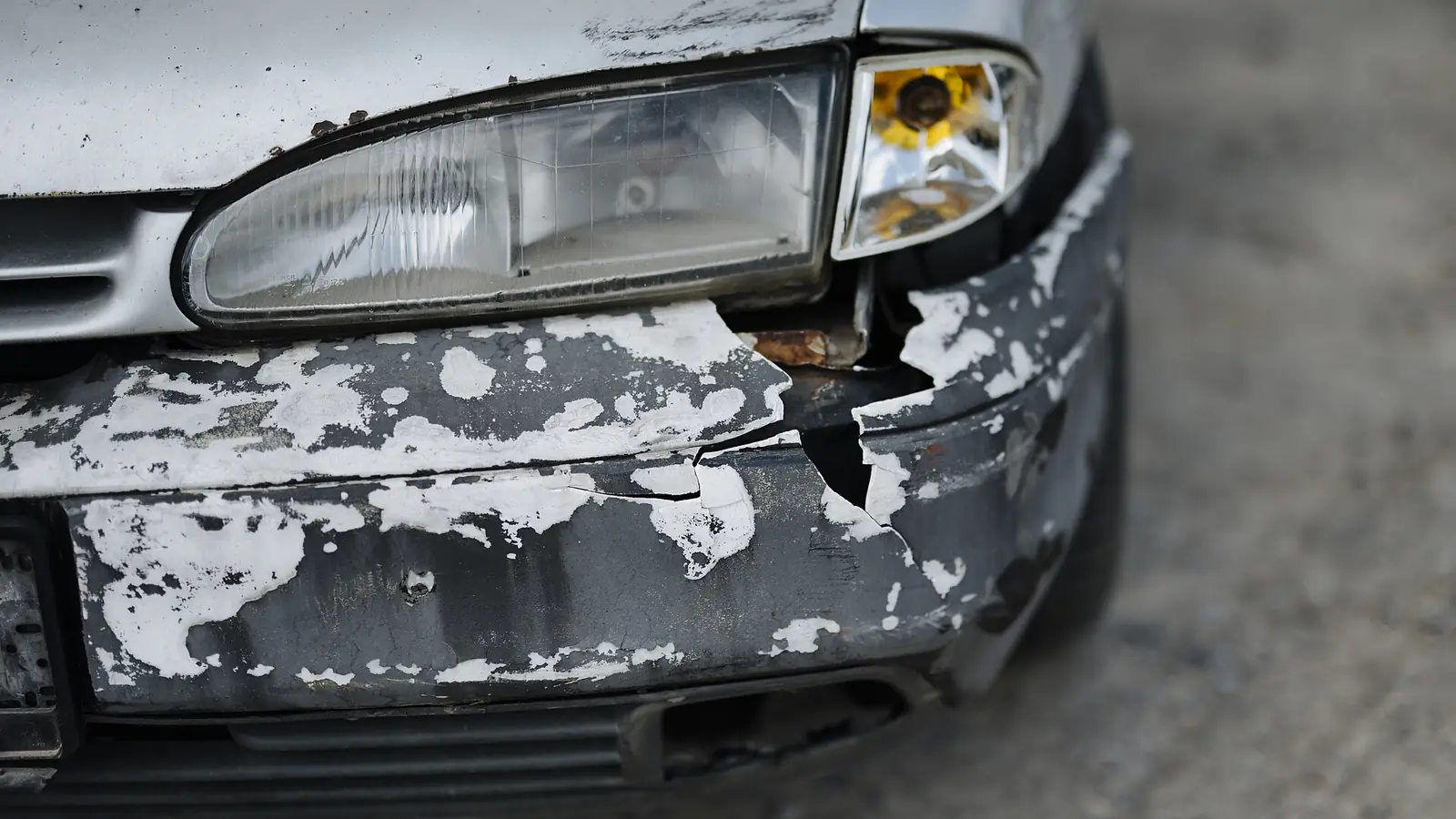
- The clear coat is peeling or turning white on one panel, while the rest of the car is fine
- A previous repair has started to bubble or crack, or clearly doesn't match
If there's a dent, the panel work happens first. Our step-by-step dent repair guide shows what's involved.
Why painters blend into the next panel
Even when paint is mixed to your car's exact colour code, a freshly sprayed panel can look slightly different from the one beside it. Your original paint has faded a little in the sun, and metallic flakes can settle at a slightly different angle. To hide that, the new colour is faded out onto the edges of the neighbouring panels, and the clear coat covers the whole area. Done properly, you can't see where the repair ends. That's why a "one door" job sometimes involves part of the fender or the next door too.
When a full respray makes sense
A full respray is the biggest paint job there is, so it should be the right choice, not the default one. It's worth it when:
- The clear coat is failing all over. In strong sun, the roof, bonnet and boot usually go chalky or start peeling first. Once it has spread across most of the car, repairing panel by panel stops making sense.
- Lots of panels are damaged. When more than about half the car needs paint, a complete respray usually gives a more even result for not much more money.
- You want a new colour. That's a full respray by definition, and the change has to be recorded on your RC.
- You're restoring an older vehicle. A restoration usually means taking the old paint off and starting fresh.
A respray in the original colour, with proper prep, doesn't hurt resale. A rushed one does: buyers and dealers look for overspray on the rubbers, uneven texture and mismatched shades.
Quick comparison
| Problem | Usual fix | Typical time |
|---|---|---|
| Swirls, light scuffs, haze | Machine polish | A few hours |
| Small stone chips | Touch-up | Same day |
| Deep scratch or dent on one panel | Panel repair, blended into the panels next to it | Around a day, longer with dents |
| Clear coat peeling on one or two panels | Panel repaint | A day or two |
| Clear coat failing across the car, or a colour change | Full respray | Several days or more |
Questions to ask before you decide
- Can this be polished out, or does it really need paint?
- Will the new paint be blended into the surrounding panels?
- Will trims, handles and lamps be removed, or masked?
- How many coats of clear go on, and is it polished afterwards?
- What happens if hidden rust or old filler turns up once the panel is sanded?
A good painter will happily tell you when a polish is enough. If you're not sure what your car needs, send us a few photos and we'll give you an honest answer.
Questions we get asked
Will a repainted panel look different from the rest of the car?
It shouldn't, if the colour is mixed to the code, checked against your car and blended into the panels next to it. Mismatches usually come from skipping the blend to save time, especially on metallic and pearl colours.
Can I fix scratches myself with a touch-up pen or scratch remover?
For tiny chips and very light clear coat marks, yes. Scratch-remover compounds are mild polishes, so they only help with marks that don't catch your nail. Anything deeper needs proper paint, or the area can end up looking worse.
Does a full respray reduce a car's resale value?
A quality respray in the original colour generally doesn't. A poor one does, because buyers read overspray, uneven texture and colour mismatch as signs of an accident. Keep your invoice: it shows the work was cosmetic.
How quickly should I fix a scratch that's down to the metal?
As soon as you can, ideally before the next rain. Bare steel starts rusting quickly in humid weather, and the rust creeps under the surrounding paint, turning a small repair into a bigger one.

Written by the Rebooterz teamWe're a car and bike paint and bodywork garage in Thiruverumbur, Trichy. Over five years we've finished more than 120 vehicles, from scratch and dent repairs to full resprays, airbrush art and restorations, and we now buy and sell used bikes too. More about us.