Used bikes
Buying a used bike in Trichy: the complete checklist
A second-hand bike can be a great buy or an expensive mistake, and the difference usually shows up in the first half hour. Here's what to check, in roughly the order we check bikes in our own garage.
In short
- Check the papers before the bike: RC, chassis and engine numbers, insurance, PUC and any loan.
- Look for hidden accident damage. Overspray, mismatched colours and scratched lever ends tell a story.
- Start the bike from cold, listen to it, look at the smoke and take a proper test ride.
- Don't pay until you have signed transfer forms, the original RC and both keys.
Set your budget, including the extras
The price on the bike isn't the whole cost. Keep some money aside for:
- The ownership transfer at the RTO
- Insurance, if the current policy is close to expiry, plus moving it into your name
- A first service: oil, filters, brake pads, and the chain and sprockets if they're worn
- Tyres and the battery, which are easy to overlook on a test ride
Shortlist a few models that fit your budget and the riding you do. Popular commuters such as the Splendor, Shine, Pulsar, Apache, Activa and Jupiter are easy to service and easy to sell again later.
Check the papers first
If the papers aren't right, it doesn't matter how good the bike is. Ask to see the originals, not photos.
- Registration certificate (RC): the owner's name should match the seller's ID. If the seller isn't the owner on the RC, find out why before going any further.
- Chassis and engine numbers: match both numbers on the bike against the RC. The chassis (frame) number is usually stamped on the steering head or the frame, and the engine number on the engine casing. Signs of grinding or re-stamping are a serious red flag.
- Insurance: third-party insurance is compulsory. Check the policy is valid and covers the same registration number.
- Pollution under control (PUC) certificate: it should be current.
- Loan (hypothecation): if the RC shows a bank or finance company, the loan has to be closed and the hypothecation removed, using the lender's NOC and Form 35. Don't buy a bike with an open loan on it.
- Pending challans: check the registration number for unpaid traffic fines on the government's e-challan portal or in the mParivahan app. The vehicle details shown in the app should match the RC too.
- Service records, the original invoice and both keys are all good signs of a bike that's been looked after.
Look for accident damage with a painter's eye
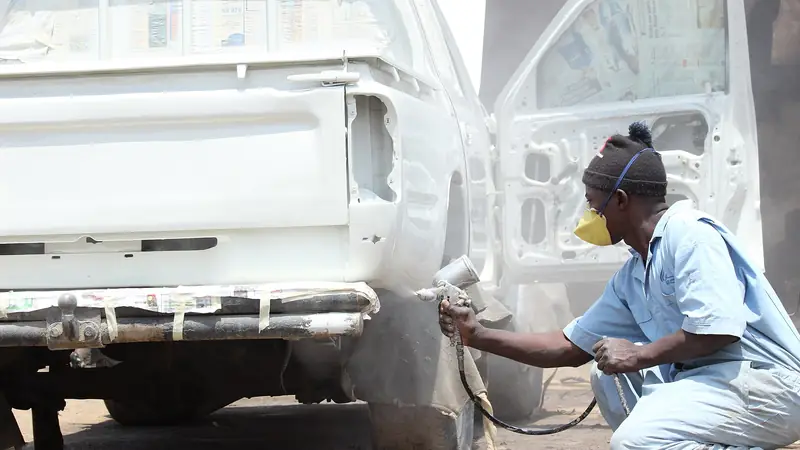
As a paint and bodywork garage, this is where we spot the problems most buyers miss. A fresh coat of paint can hide a crash. Look for:
- Colour mismatch: compare the tank, side panels and mudguards in daylight. A panel that's slightly brighter, or a slightly different shade, has probably been repainted.
- Overspray: paint mist on rubber, cables, the frame or the engine near a painted part.
- Uneven texture: a rippled "orange peel" surface, runs, or dust specks trapped in the paint.
- Stickers in odd places: a large decal on the tank can cover a dent or a bad repair. Feel under it with your fingers.
- Fall marks: scratched bar ends, lever tips, footpeg ends, mirror backs and engine casing edges all mean the bike has been dropped. A slow tip-over in a parking lot is no big deal; heavy marks on both sides deserve questions.
- Bent parts: crouch in front of the bike and check that the fork tubes are parallel, the handlebar is straight, and the front wheel lines up with the rear. A bent frame or fork is expensive to fix and affects safety.
- Weld marks or fresh paint on the frame, especially around the steering head and the footpeg mounts.
A cosmetic repaint isn't a problem in itself. Plenty of good bikes have a touched-up tank. What matters is whether the paint is hiding structural damage.
Engine and mechanicals
Ask the seller not to start the bike before you arrive. A cold start tells you much more than a warm one.
- Starting: it should start easily, on the self-starter or the kick, and settle into a steady idle.
- Smoke: a little white vapour on a cool morning is normal. Blue smoke means the engine is burning oil. Black smoke means it's running rich.
- Noises: listen for knocking, rattling or loud ticking from the top of the engine.
- Leaks: look for oil around the engine, and on the fork seals at the bottom of the front fork tubes.
- Clutch and gears: gears should go in cleanly, and the clutch shouldn't slip when you accelerate hard in a higher gear.
- Chain and sprockets: hooked or sharp sprocket teeth and a slack, rusty chain mean a replacement is due soon.
- Brakes and tyres: check the pads or shoes, the tyre tread, and the sidewalls for cracks. The four-digit date code on each tyre gives the week and year it was made.
- Electricals: the headlight on both beams, indicators, brake light, horn and the instrument cluster.
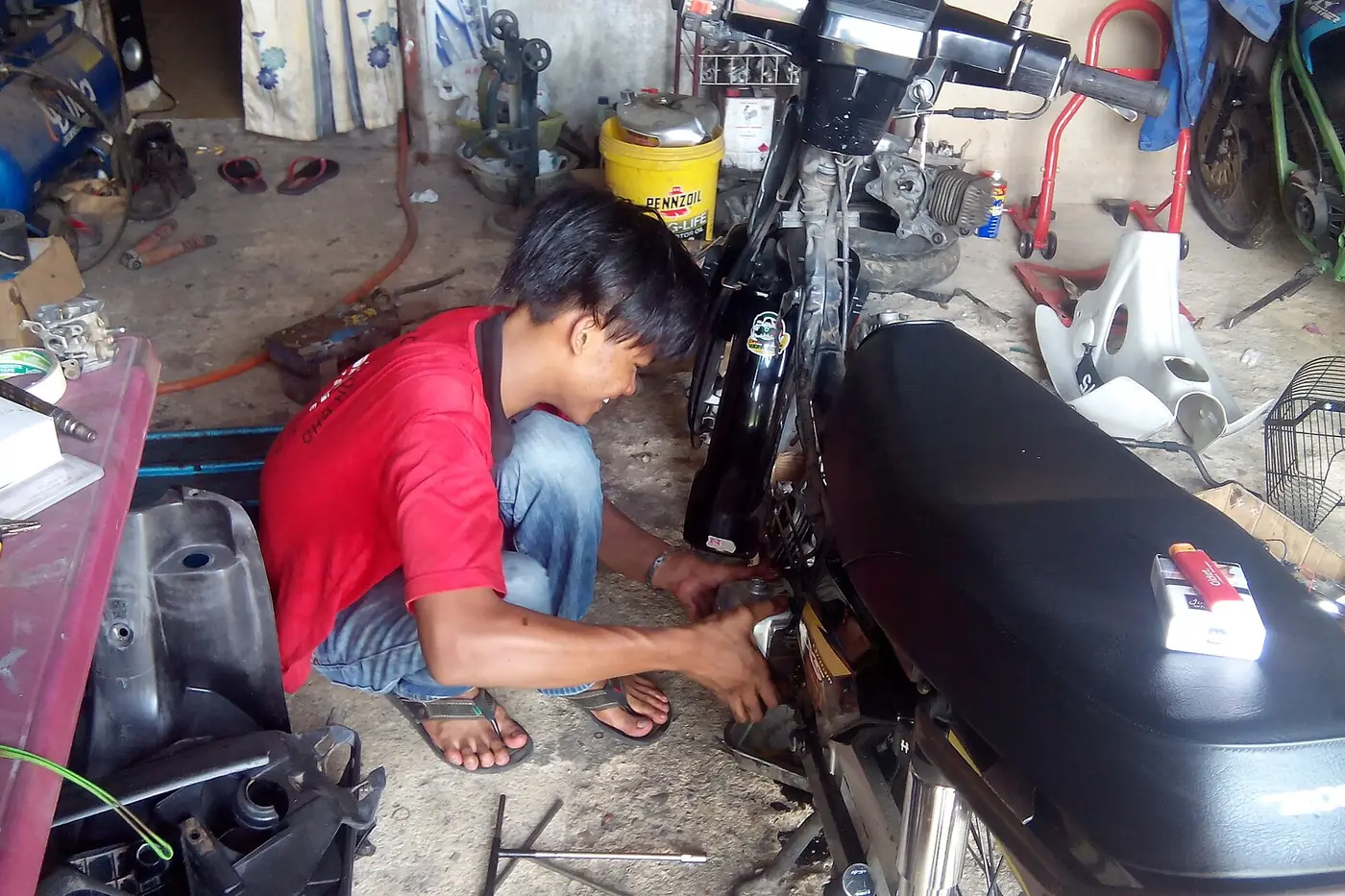
Scooters: a few extra checks
On a scooter, listen for whining or rattling from the drive belt area as you pull away, check the floorboard and underbody for rust or cracks, and look inside the under-seat storage for signs of water getting in.
Take a proper test ride
Ride for at least 10 to 15 minutes if you can, including some speed and some bumps. The bike should run straight with your hands relaxed on the bars, brake without pulling to one side, and feel stable over bumps. Vibration through the bars or footpegs at a steady speed can point to wheel, bearing or engine problems.
Only ride with your own licence, on a bike with valid insurance, and wear a helmet.
Is the kilometre reading honest?
Odometers can be wound back or replaced. Compare the reading with the bike's wear. A bike showing 15,000 km shouldn't have worn-out footpeg rubbers, shiny-smooth grips, a sagging seat and a stretched chain. Service records with dates and readings are the best evidence you can get.
Before you pay
Once you've agreed a price, make sure you leave with:
- The original RC and both keys
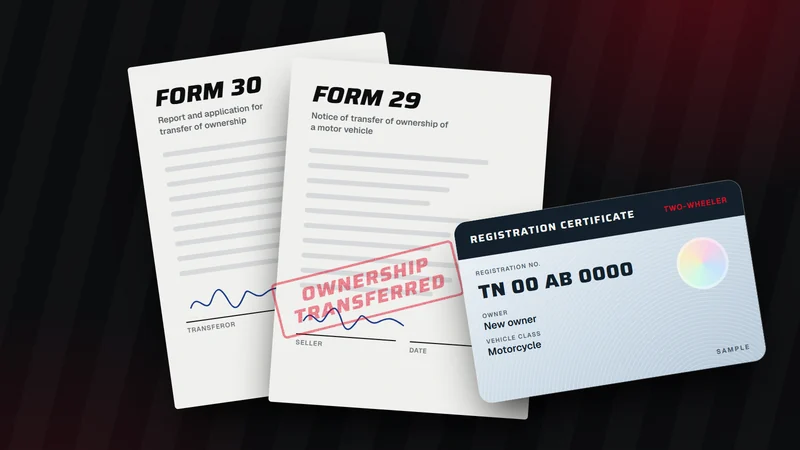
- Forms 29 and 30, filled in and signed by the seller
- A signed delivery note or sale letter with the date and time of sale, the price, and both your details
- Form 35 and the lender's NOC, if the bike had a loan
- Copies of the seller's ID and address proof
- The insurance policy and PUC certificate
Pay by bank transfer so there's a record, and start the ownership transfer straight away. Our RC transfer guide for Tamil Nadu walks through the process and the deadlines.
Buying from a garage
Buying from an individual can get you a good price, but you do all the checking yourself. At Rebooterz, every used bike we sell is looked over in our garage first. Dents and scratches are fixed in our own paint booth, the RC, insurance and loan clearance are checked, and we help with the RC transfer. You can see the bike in person at our Thiruverumbur garage before you decide.
Questions we get asked
Which documents do I need when buying a second-hand bike?
The original RC, valid insurance, a current PUC certificate, Forms 29 and 30 signed by the seller, a copy of the seller's ID, and Form 35 with the lender's NOC if the bike had a loan. Ask for the service records and both keys too.
How do I check if a used bike has pending challans?
Enter the registration number on the government's e-challan portal (echallan.parivahan.gov.in) or in the mParivahan app. Ask the seller to clear any fines before the sale.
Is it safe to buy a bike that still has a loan on it?
Only once the loan is closed and you have the lender's NOC and Form 35 to remove the hypothecation from the RC. Until then, the lender has a claim on the bike.
Can I see your used bikes before buying?
Yes. The bikes are at our garage in Thiruverumbur, open Monday to Saturday, 9:30 am to 8:30 pm. WhatsApp us first so we can have the one you want ready.

Written by the Rebooterz teamWe're a car and bike paint and bodywork garage in Thiruverumbur, Trichy. Over five years we've finished more than 120 vehicles, from scratch and dent repairs to full resprays, airbrush art and restorations, and we now buy and sell used bikes too. More about us.